






Darren Aronofsky may not have the same level of name recognition as Spielberg, Scorsese, or Tarantino, but he’s a true film artist with a singular point of view, more hits than misses, and a reputation for catapulting (or reviving) the careers of his actors. Still, when film buffs discuss their faves, Aronofsky doesn’t always get brought up the same way as, say, Paul Thomas Anderson might, even though their movies have both won a total of three Oscars and Aronofsky’s have made much more money at the box office. Both directors (and many of those other previously mentioned big names) are drawn to complicated and perhaps even unlikable protagonists in bleak and challenging stories about the human condition. If there is a distinction, it’s that Aronofsky’s films started out bleak and kept getting bleaker. And weirder.
Case in point: he and Christopher Nolan both made their debuts in 1998 with the black-and-white, ultra-low-budget films Pi and Following. Both were gritty, innovative, and well-received. A decade later, Aronofsky was making ballet body horror with Black Swan, and Nolan was making Batman movies. 20 years on, Aronofsky received an F CinemaScore for Mother!, while Nolan was an awards darling with Dunkirk. While Aronofsky is undoubtedly a talented director, it’s possible he prioritized art and the depiction of suffering over commerce and good storytelling. However, that appears to have changed with Caught Stealing, which is as straightforward and crowd-pleasing a movie as he’s ever made, yet one that nevertheless retains his aesthetic and perspective.
Aronofsky Had Gotten Too Repetitive and Self-Serious
A24
Aronofsky’s Pi is about a man whose skill and obsession with math drives him to madness and violence. His sophomore effort, Requiem for a Dream, is about four people whose lives are destroyed by addiction… arguably a different kind of obsession. It ends in madness and violence. The Fountain, too, is about genius, obsession, and the fragility of the body. Across multiple timelines, a Spanish conqueror and a scientist search for the tree of life and a cure for cancer. It ends in a type of madness and violence.
The Wrestler — arguably his most accessible movie until now — sees a past-his-prime Mickey Rourke unable to quit fighting. Though the final shot is ambiguous, he’s paid the price with his mind and body either way. So has Natalie Portman as a self-punishing ballerina in Black Swan, and Brendan Fraser as a severely obese English professor in The Whale, which have suspiciously similar conclusions. Skill plus obsession equals madness and violence: that’s the Aronofsky equation. Even his biblical epic, Noah, dives into those themes. In his defense, most of those movies are pretty good. But by the time The Whale played film festivals, it felt like territory that the director had covered before, and better.
2017’s Mother! has become something of a punchline, but it’s worth examining on its own because it marks just how far afield of traditional filmmaking he went. Jennifer Lawrence (relevant to the subject material, having been his former romantic partner) plays the titular Mother, who is overwhelmed by the responsibility of caring for her husband, a brilliant poet (Javier Bardem), and the house they share, as fans of “Him” descend upon them. Famously, Mother gives birth to a baby who is literally torn apart by the horde of Him’s admirers. Mother! has everything Aronofsky is known for: genius, obsession, madness, violence, plus memorable visuals and great acting. But even its defenders would say it’s unashamedly more pretentious and self-serious than his other films. One not-so-subtle reading of Mother! is that Aronofsky sees himself as the poet.
Interestingly, skill plus obsession equals madness and violence could also describe Caught Stealing. The difference is, it’s completely unpretentious. Turns out, when Aronofsky uses his own skill in the service of an old-fashioned popcorn movie instead of a piece of art, the result is unexpectedly refreshing.
‘Caught Stealing’ Is a Swing in a New Direction for Aronofsky
Sony Pictures
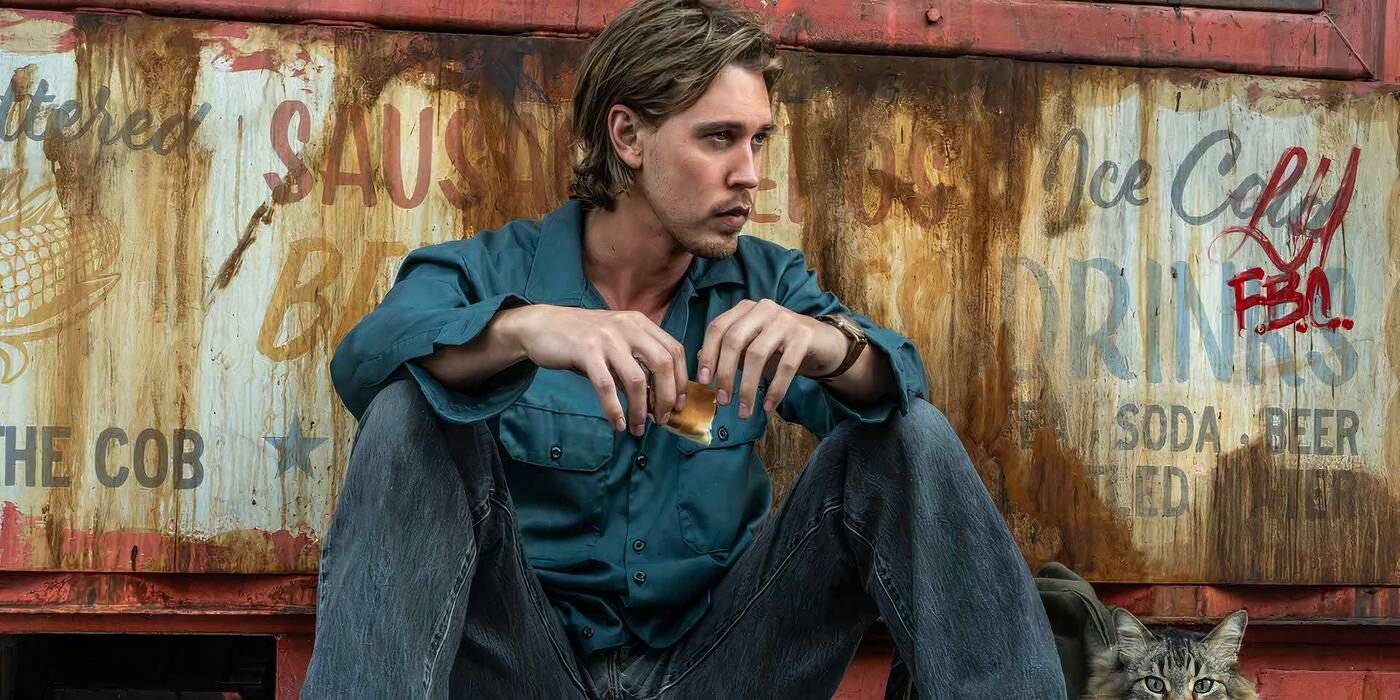
In Caught Stealing, Hank (Austin Butler) is a former baseball phenom who lost out on his chance to play in the majors because of a drunk driving accident. He can’t process this past trauma and is stuck in a dreary day-to-day present, living in squalor and subsisting on beer and bagels. He’s got a girl who has to put up with him (Zoë Kravitz), a troublemaking friend (Matt Smith), and a mom who he’s afraid to disappoint (wait for the surprise cameo). That sure sounds like the setup for an Aronofsky film, and there is most definitely a psychological element to Caught Stealing that’s in keeping with the director’s other work. However, because Hank’s anguish is backstory (and not the whole story), it adds depth to what’s otherwise a madcap genre mashup of action, thriller, and dramedy.
Tonally, Caught Stealing has a lot in common with the films of the Coen brothers and Guy Richie, plus a little overlap with the world of John Wick. In addition to Hank’s fully-realized pathos, there’s a strong sense of place and time (NYC’s Lower East Side in 1998), stunningly rendered fight and chase scenes, and a pet in peril (a cat named Bud). Most surprisingly, Caught Stealing is a really fun — and funny — watch.
A good comparison is The Big Lebowski, which also makes the audience laugh uncomfortably as horrible things happen. Both films task fish-out-of-water losers with solving absurd cases that spin wildly out of control. They’re over-the-top but unmistakably authentic, which seems like a contradiction. Butler’s Hank is a recognizable person who sustains real bodily injury, and his mistakes have consequences. It’s like Looney Tunes if Bugs Bunny struggled to get back up after he was hit with a wrench.
That’s not to say Caught Stealing is as good as or will become as iconic as The Big Lebowski. Critical reception has been that it’s a solidly entertaining crime caper, and that’s probably how the public will react, too. But just the idea that Aronofsky made something enjoyable is significant. It helps that the source material — a novel of the same name by Charlie Huston, who also wrote the screenplay — provided structure and pacing. But Caught Stealing is actually grittier and more nihilistic in book form. There’s still projectile vomit, clogged toilets, and head wounds galore. It’s just that Aronofsky is relishing instead of wallowing in awfulness this time around (see: litterbox as inciting incident).
The film is also buoyed by the theme of self-forgiveness. Hank realizes he’ll never be as “great” as he thought he’d be, and he can never have a clean conscience, but he can move forward. Maybe this departure means the director is taking some of the pressure off himself, which would be a good thing, especially if we keep getting good movies. None of us needs Darren Aronofsky to suffer for his art. Caught Stealing is in theaters now.
Release Date
August 29, 2025
Director
Darren Aronofsky
Writers
charlie huston
Producers
Ari Handel, Jeremy Dawson
You can view the original article HERE.