







The Kathleen Kennedy era is ending at Lucasfilm, and it was a wild ride. In 2012, Kennedy became president of Lucasfilm upon its sale to Disney, and the value of Star Wars, simply from a creative potential standpoint, seemed even more staggering than the dollar amount of the sale (which was plenty staggering itself). Yet since then, the franchise has come to feel creatively bankrupt, with alienated fans, multiple flops and failed series, and a total lack of the thing that defined Star Wars for its entire life prior to the deal: pure undiluted hype.
Is this Kennedy’s fault? Did she actually do pretty well considering the megacorporation of Disney behind her and the sometimes rabid and insane fandom in front of her? We can all play Monday morning quarterback on Kennedy’s time at the wheel of the Titanic. While she didn’t steer directly into the iceberg, it does seem like a messy run. She oversaw one of the more transformative periods in industry history and ushered Star Wars into a very different era. What she got, and where she left it, is a mixed bag, to put it mildly. Before we can break down the wins and losses, we have to set the stage. Cue opening crawl…
A Long Time Ago…
In case you didn’t know, Star Wars is the little 1977 film that changed the entire industry. We are still, in every sense in the business, living in the long shadow cast by that Star Destroyer that flew overhead in the very first frame. From how films are marketed, constructed, plotted, packaged, and developed to how audio, visuals, VFX, and even camera technology are designed and implemented. Like it or not, Star Wars and its creator, George Lucas, are the godfathers of the modern landscape.
The biggest driver behind Star Wars for so long was the fact that ‘new’ Star Wars was something to get super riled up about. In the 13 years since Kennedy and Disney took stewardship of the franchise, the hype has vanished. Part of this is the commodification of every last inch, not just for products to sell (that was always part of the old-school groundbreaking Lucas playbook) but also because every little nook and cranny has been mined for a new story. It paints everyone in a corner. Either it’s stale, or it’s too different. Kennedy and Disney didn’t know it in 2012, but that would be the razors edge they’d have to live on.
Related
Everything We Know About Ryan Gosling’s ‘Star Wars’ Movie
Ryan Gosling is set to star in a Shawn Levy-helmed ‘Star Wars’ film, and here’s everything we know about it!
The hype being gone, though, is a problem related to output. You can find die-hard Star Wars fans who didn’t watch The Acolyte or Skeleton Crew, the two latest series from the franchise. On the other hand, this is because continually churning out new Star Wars content means more merch. It means more swings at the plate. The goal now seems aligned with the modern reality of the marketplace. Audiences are fragmented. You don’t make one big Star Wars movie for everyone. You make a ton of Star Wars streaming series, one for each kind of fan. Kennedy and the team learned this the hard way. Let’s break it down.
It’s important to note that Kennedy is one of her generation’s defining filmmaking talents. She came on the scene as a producing partner of Steven Speilberg’s with Amblin Entertainment, and the run they had was so strong that Amblin is now an adjective for a kind of movie/style. She branched off eventually with husband and partner Frank Marshall and continued to have unparalleled success producing all types of feature films. Kennedy has produced movies that have earned in total over $10 billion worldwide. Suffice it to say she was an obvious and strong choice to lead Lucasfilm at Disney. The promising, hyped beginning wasn’t meant to last. Forces in and out of her control would conspire to alter the trajectory completely.
Where Did Things Go Wrong for Kennedy and ‘Star Wars’?
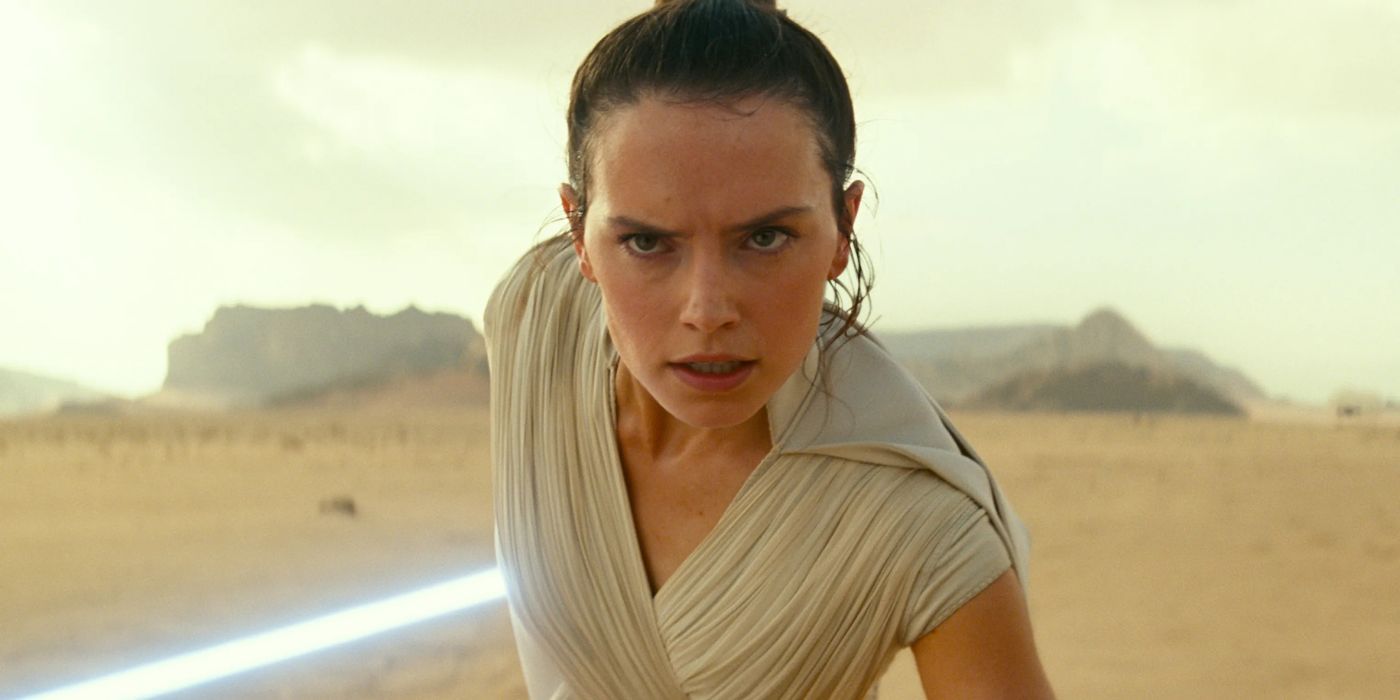
Star Wars hype was alive and well when the first new feature in a new trilogy, The Force Awakens, began its roll-out. Critics and fans were thrilled to put the problematic prequels (Episodes 1-3) behind them. The old cast would return in smaller roles, passing the lightsaber baton to a younger generation that included talent like Adam Driver, Oscar Isaac, Daisy Ridley, and John Boyega. Embracing some of the older design elements, story points, and techniques seemed like an easy win, putting Amblin/Spielberg imitator extraordinaire JJ Abrams at the helm along with some help from top OG Lucasfilm scribe Lawrence Kasdan… well, it seemed like things were in perfect hands.
The Force Awakens did indeed thrive, but if you looked closely, you could see the cracks in the facade, the canary in the coal mine. There was something extremely uninspired and stale about this entry. It more or less repeated every beat of the original films. It was more of a remake than a sequel, maybe more appropriately named a re-quel. The characters, though embodied by extremely dynamic and talented young stars on the rise, were flat and underdeveloped. The end was a massive cliffhanger for the second feature in the trilogy. It seemed like everything could be fine, but there was something unstable about this foundation. Where could it go exactly? Was it really going to do anything new?
The chickens of doubt came home to roost with the follow-up, The Last Jedi. Rian Johnson took things in a totally different direction than Abrams had started them, an entirely different film tonally that seemed to also fall back into some of the visual CG mess of the prequel era. Mark Hamill (Luke Skywalker) was outspoken in his dislike of his character’s arc. Fans at this point went into something of a civil war that grew ugly, embodying an emerging subculture of awful fandom that was going to any length to taunt women, people of color, and things that felt too different. This was already the dichotomy the modern Star Wars would face. It can’t be too different. It can’t be too familiar.
Related
Wait, Was Divisive ‘Star Wars’ Disney+ Series ‘The Acolyte’ Popular After All?
You’d think being one of the biggest shows on the streamer would be enough.
Rogue One was released as a stand-alone film about the Death Star plans. The film had a mixed response, though it was clearly for the older Star Wars fans, and did not hit the four quadrants that Star Wars had always managed to before. It was evidence that there could be smaller-scale stories that resonated with smaller sections of the audience. It would be an idea the Kennedy regime would build on later. The next stand-alone film, though, Solo, flopped hard. This was easy to see coming, though, as it attempted to recast Harrison Ford’s iconic role, leaving people wondering why certain decisions were being made and who was making them. It’s hard to know what lessons executives take from failure. Could a different recast have worked? Did Solo mean some characters would never be rebooted or recast? It’s strange since Batman or Spider-Man have been recast countless times, and it always seems to go just fine.
By the time The Rise of Skywalker came out in 2019, the 7-year run was not strong. Colin Trevorrow had been slated to write and direct the film but, at the last minute, was replaced by Chris Terrio and JJ Abrams. The resulting film was a complete mess. But this wasn’t the first time in the run that replacements and reshoots had happened. Solo lost Lord and Miller for Ron Howard. Rogue One started with Gareth Edwards but then reportedly handed the reigns over midstream to Tony Gilroy. This constant juggling of creative leadership has to have at least something to do with such uneven results.
Unlike some of the prior films, Rise of Skywalker was not controversial in reception. Nobody liked it. It has more or less moved Abrams out of the limelight entirely as a meaningful writer/director, and it left the concept of Star Wars feature films totally broken. There has not been one since.
Why Wasn’t Kathleen Kennedy Fired?
2019-2020 would represent a sea change in the industry, and despite the struggles of the first seven years at the helm, Kennedy would adapt and thrive. There was still her proven track record predating this run and the fact that while maybe Star Wars wasn’t pleasing fans and critics, it was still raking in cash. Merchandise was booming, and Disney was investing hard in an expansion of its parks that included a new Star Wars land and, eventually, a unique and disastrous hotel/vacation concept.
Kennedy would be given a longer leash, in part because stability at this level was more important than what happens on message boards and in film reviews. Star Wars/Lucasfilm continued to be a massive investment. Someone capable is needed to keep greenlighting and developing content to market and sell across all the Disney platforms.
Then the magic happened that only Disney could take to light speed. In the feature film-less years since the Rise of Skywalker, Kennedy and company stumbled into something more effective and plenty profitable. They finally got their win with a streaming series on the new platform Disney+:The Mandalorian. This time, the creative talent was Jon Favreau, who came over from big wins at Marvel and seemingly knew how to balance fan service with new adventures in a way that alienated very few and overjoyed so many more. At the center of the series were two faceless characters. A mysterious masked badass voiced by Pedro Pascal and a cute baby Yoda puppet that became an instant global sensation. Cha-ching.
Related
‘Revenge of the Sith’ Returns to Theaters for ‘Star Wars’ Prequel’s 20th Anniversary
April will be a big month for ‘Star Wars’ fans as ‘Revenge of the Sith’ returns to theaters just days after ‘Andor’ Season 2 debuts on Disney+.
The Mandalorian was proof of concept for Star Wars streaming series, and like any good corporation, they went in hard on what works. Multiple seasons of the show, including a spinoff with beloved OG character Boba Fett, came along. By now, the prequels of the early aughts had been more or less rehabilitated, and the fans looked at them fondly in light of the catastrophe of the Abrams/Kennedy sequel trilogy. This meant an Obi-Wan Kenobi series bringing back fan favorite Ewan McGregor as Kenobi, as well as Hayden Christenson as Anakin/Darth Vader. Another major figure emerged in Dave Filoni, the animator who trained directly under George Lucas, building the epic animated Clone Wars saga from before the Disney purchase.
Nobody knew Star Wars inside and out quite like Filoni, and his characters, storylines, and ideas from the past were now being integrated into the new shows and the expanding universe. It seemed Kennedy had found something that worked on a platform that fit the modern fragmented audience. The growing pains of the teens were seemingly in the past. Yet the more series that were churned out, the more things started to go stale again. Ahsoka wasn’t a massive win. The Acolyte fell into polarizing territory, and Skeleton Crew, while pretty good, didn’t get watched by many people.
So What Is There to Make of Kennedy’s ‘Star Wars’ Run?
It’s unfair to give her all the credit or the blame for how things went. She can’t change the way the technology, marketplace, and industry changed during her reign. 2012 was a VERY different time. Her era spanned a massive strike, a shutdown due to a pandemic, and the subsequent change of the entire theatrical/streaming model. It’s also very hard for any of us to appreciate the complexity of her role. She was caught between a religiously fanatic fanbase and a massive conglomerate. Creative demands shrink in the face of canonical lore and powerful shareholders. This is not simply an exercise in telling good stories. Everyone has an opinion about what Star Wars ‘should do,’ but what can actually be approved and executed well is an entirely separate matter. It’s really a minefield.
And yet… it’s hard not to look at so many missed opportunities. So many rakes were stepped on. The failure of the initial film trilogy looms large over everything in her run. How could they have not planned all three films at once? The model had been so well established? They rushed to complete and put out these features every few years with so little appropriate development and so little cohesiveness. One only needs to look over at the Marvel Cinematic Universe next door to see cohesive planning and execution that built to a massively successful finish. Was it all possible? Of course. On the other hand, Kennedy found a way to get Star Wars back into the zeitgeist. Give credit where credit is due.
Related
The 10 Cutest Characters in All of ‘Star Wars’
From droids to porgs, these are the characters from ‘Star Wars’ that won audiences over for being so adorable.
The recovery isn’t without its missteps, though, and looking at other mega-franchises, it just seems this is the new era, and Star Wars, which went from something with very few very hyped products to something with many swings and misses, has changed forever with the times.
Kennedy leaving also doesn’t mean Star Wars and Lucasfilm are in better shape, either. Maybe she was the last voice from the generation of boomers who really understood why Amblin and Lucasfilm worked in the first place. Maybe she knew how to adjust midstream and salvage things, and we assume all the changes and audibles that were called made things worse.
There is so much we can’t see and likely won’t ever know. Kennedy left her mark, though, ushering Star Wars into the new modern era of streaming platforms and massive interconnected series. There will certainly continue to be more and more (and more) Star Wars. Whatever you think of it all, there is no doubt that a hyped Star Wars theatrical release is a thing left behind a long, long time ago in a galaxy far, far away. The Star Wars franchise is streaming on Disney+.
You can view the original article HERE.