









187
There was a time when a shopping centre only needed good stores. That era is fading — thousands of mall locations have closed across North America over the past decade, and foot traffic still hasn’t fully recovered to where it was before the pandemic. What’s bringing people back isn’t another boutique or a food court refresh. It’s the butterfly tunnel their daughter won’t stop talking about. The seasonal moss garden looks different every time they visit. The immersive activation that makes them reach for their phone before they reach for their wallet. This is experiential retail — a design-led approach that turns commercial spaces into destinations worth the trip. And it’s booming: according to ICSC, the experiential retail market in the U.S. is valued at $132 billion and projected to more than quadruple by 2035. The logic is straightforward — given a choice between a mall that sells things and a mall that makes you feel something, you’ll pick the one that feels like somewhere worth going.
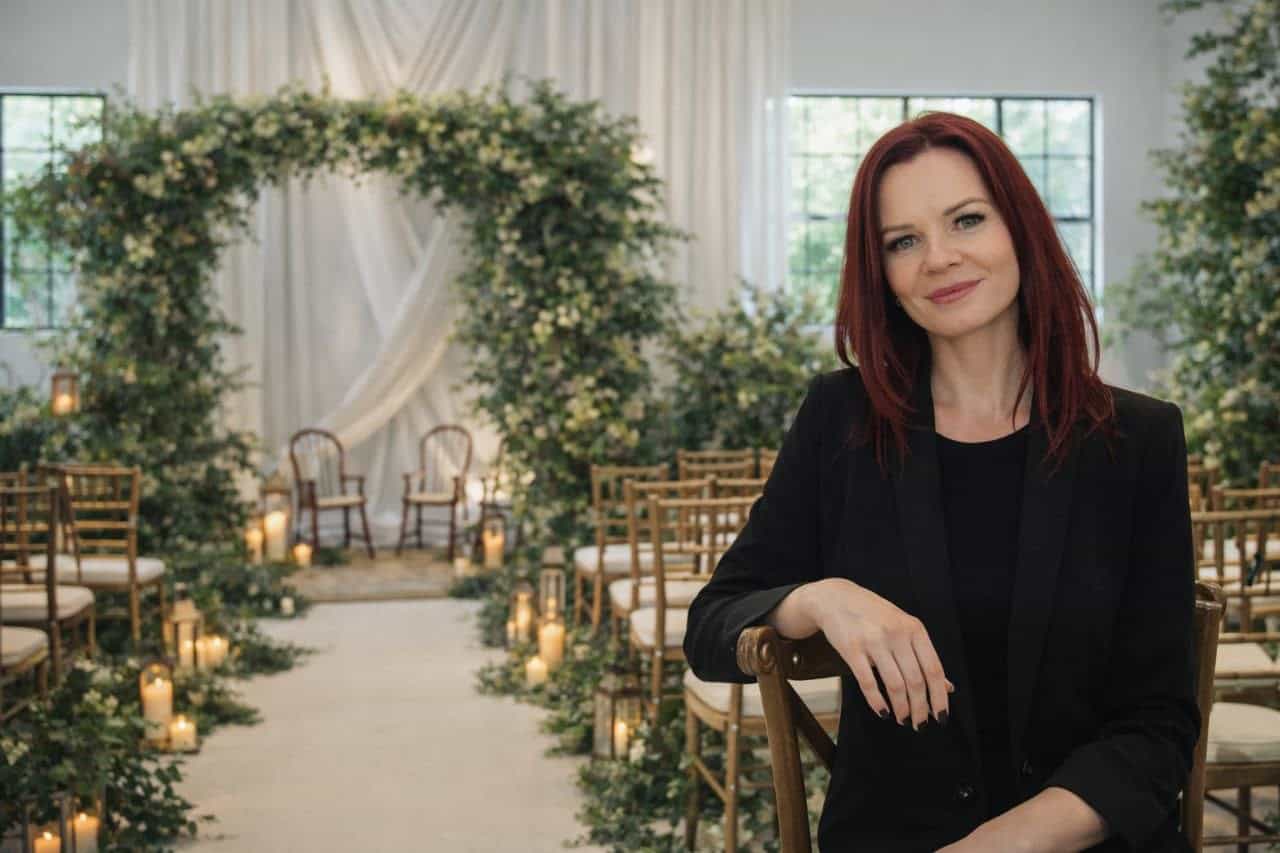
Rita Shir Elbaum builds the spaces people come to feel. As Creative Director of Elbaum Studio and ElMossDecor and a partner at Magic Moments Event Decor, she has spent 18 years developing a practice where preserved moss, reusable modular frames, and large-scale experiential design meet — in shopping centres, on Netflix and CTV sets, and at charity galas for SickKids and the hospitality industry. Her Hybrid Modular Biophilic Design Method allows installations of up to 3,000 square feet to be assembled, stripped, and rebuilt seasonally without wasting the structure, cutting material waste by 60% and installation time by up to 30%. She built this expertise across two continents, starting with floral training at Zer4u in Israel and scaling to multi-zone activations for Cadillac Fairview, the operator behind six of Canada’s ten highest-performing malls.
We asked Elbaum how preserved moss ended up in luxury retail, what it takes to build a 3,000-square-foot immersive environment on a deadline, and why the modular approach she pioneered is changing how commercial spaces think about design, waste, and repeat visitors.
The ICSC projects the experiential retail market to quadruple by 2035 — and your own installations for Cadillac Fairview properties have covered up to 3,000 square feet. These are spaces people come specifically to see. What’s driving major shopping centres to invest in experiential décor at this scale?
Nobody drives to a mall only because they need a store; they have a phone for that. What they don’t have at home is a 3D tunnel their kids can run through, or a butterfly-themed world they want to photograph and post online. That’s what we build for operators like Cadillac Fairview, a reason to show up. Some of these activation zones pull 10,000 to 50,000 visitors a day, and at that point, the investment kind of justifies itself.
You trained at Zer4u in Israel, opened your own floral studio, then moved to Canada and ended up designing immersive environments for some of the country’s biggest malls. That’s not an obvious trajectory. When did it become clear that traditional floristry wouldn’t be enough?
Not right away. I started in 2008 as an assistant in a flower shop, conditioning stems, learning to build a hand-tied bouquet. Very basic stuff. Zer4u gave me a strong technical foundation, and I eventually opened my own studio doing weddings and events. I loved the work. But when I moved to Canada, I had to rebuild from nothing because I had no contacts and no portfolio that anyone recognized. The wedding business came back, but the first time a commercial client asked me to fill a large open space, not a table, something clicked. I realized I’d been operating in a very small frame. That’s when I launched ElMossDecor and later partnered with Magic Moments Event Decor, because the projects were getting too complex for one studio to handle.
You’ve done over 150 preserved-moss installations for corporate offices, retail spaces, and luxury interiors. The obvious pitch is zero maintenance — but you clearly see more in the material than convenience. What is it about moss that keeps you coming back to it as your primary medium?
You have to touch it, because photos really don’t do it justice. Preserved moss has a warmth and a depth that nothing synthetic can match, and I think it’s because it was actually alive; you feel that when you’re standing next to it. I work with it in pieces, from small branded logos to walls of 20 to 40 square feet, and every single one shifts the atmosphere of a room. And not just visually, because moss absorbs sound, which matters enormously in open commercial spaces, and on top of that, it holds up like nothing else I’ve worked with. I’ve got installations from five, six years ago that look exactly the way they did on day one. You don’t water it, you don’t trim it, it doesn’t need light, and for a property manager who’s already juggling a hundred other problems, that’s not a small detail.
You developed something called the Hybrid Modular Biophilic Design Method — reusable frames with layered attachments that let you reconfigure a full installation without tearing down the structure. For a mall that changes seasonal décor every few months, that sounds transformative. Can you walk us through how it works on a real project?
You’re spending all this money on something that goes in a dumpster in January, and that never made sense to me. So we engineer a modular metal skeleton that’s designed to be taken apart and put back together. On top of that goes whatever the season calls for, whether it’s moss, florals, lighting, or sculptural forms, all attached through a layered system that leaves the base untouched when you strip it. So in October, a Cadillac Fairview property has a warm botanical environment, and by December, we’ve swapped the surface layer into a winter theme without touching the skeleton underneath. The visitor has no idea they’re looking at the same structure they walked past in October. I’ve reused some of those frames fifteen to twenty times, and that’s where the numbers come from: the 20 to 30 percent faster installs and up to 60 percent less material going into a dumpster.
A large-scale build for you can mean a team of up to 25 people and a multi-day production schedule. That’s closer to construction management than floral design. What does the process actually look like — from the first client call to the moment everything comes down?
First thing I do is walk the space and try to understand what this property actually needs right now, who walks through here, what’s the energy. Once we land a concept, I sketch it out with the art direction, spatial logic, and materials all mapped together. Then sourcing and fabrication: what’s available, what needs to be custom-built, what are the load-bearing requirements? Install day on a major activation is 20-plus people, sometimes working overnight, and I’m on-site for all of it because that’s when things go wrong if nobody’s watching. And the takedown is just as planned as the setup, because we’re packing frames for next season, not hauling debris. Budgets run from about $5,000 for a smaller piece to six figures for a multi-zone build.
You’ve also done set décor for Netflix and CTV, which is a completely different world — tight turnarounds, everything has to read on camera, production crews with their own rules. What surprised you most when you transitioned from retail to media?
How little room there is for adjustment. In a shopping centre, if something’s off by a few inches, you fix it on the spot, but on set, every element gets locked before the cameras roll, and that’s it. Materials have to hold up at high resolution, so nothing that looks fine to the naked eye but falls flat on screen. Colors shift under their lighting rigs, so you test everything in advance, and there’s simply no “we need another hour” because that conversation doesn’t exist on a production set. That experience changed how I plan even outside of film work. But the core of it, figuring out how a material behaves under specific light, how a structure reads from a particular angle, that’s something I’d been doing in malls for years without calling it set design.
Earlier this year, your team did the décor for the SickKids Fired-Up Gala at the Ritz-Carlton and the HSMAI Ontario Hospitality Tribute Gala at the Fairmont Royal York. Does the brief change when the goal is donations rather than foot traffic? Does décor actually move the needle at a charity gala?
It’s a different discipline altogether. A donor walks in, and the room has maybe three seconds to set a tone. For SickKids, that’s the Burn & Plastics Unit, children, so the space couldn’t be flashy. It had to feel warm and serious at the same time, respectful of why everyone was there. HSMAI was the opposite energy, the first-ever tribute gala for the hospitality industry at the Fairmont Royal York, and the room needed to feel like you’d arrived somewhere important. Two very different briefs, but in both cases I saw the same thing, which is that when the atmosphere is right, people bid higher, they stay longer, and they connect to the cause on a gut level. I’ve seen slow tables all evening suddenly pick up after we adjusted the lighting in one section of the room. It’s hard to measure, but the organizers feel it.
You’ve said your modular system cuts material waste by up to 60% compared to traditional builds. Sustainability is everywhere in design conversations right now — but does the reusable approach actually save your clients money, or is it a premium they have to justify?
The first project costs about the same as a conventional build because you’re investing in the frame infrastructure. But by the second season, third, fourth, that’s when it really pays off because there are no new structures, no fabrication from zero, and clients feel it in the budget almost immediately. That’s why most of them come back. I don’t spend on advertising because it’s all referrals and repeat business at this point, and the sustainability side of it is real; I do care about it deeply. But I won’t pretend that’s why clients call again. They call because the second project cost them significantly less than the first, and it looked just as good.
You’ve built this practice across two countries, and you’re now looking at the U.S. market and planning workshops around your method. Where do you see experiential biophilic design heading — and what’s the next chapter for you?
I think we’re still early, because when you look at hotels, hospitals, airports, corporate campuses, there’s a huge amount of space that hasn’t been touched yet, and people are genuinely tired of sterile environments where everything feels the same. The interesting frontier is integrating responsive technology like lighting, sensors, and interactive elements into natural installations. But the material has to stay real. The moment you replace everything with screens, you lose the thing people are actually responding to. For me, the U.S. is next, partnerships with architecture firms and developers. And I’m formalizing the method into something teachable. I’ve spent eighteen years figuring this out, mostly by trial and error, so it would be nice to save other people some of that time.
Presented by DN News Desk
You can view the original article HERE.




:quality(85):upscale()/2024/01/10/813/n/1922564/770445be659ee2572f4e43.58611328_.jpg "The Best Loungewear For Women on Amazon 2024")



:quality(85):upscale()/2026/10/14/001/n/1922564/314d528b6ad00a0b16f236.94960813_.png "19 Iconic Halloween Costumes to Inspire Your Plans – Starting at")

:quality(85):upscale()/2026/10/14/739/n/1922564/2321331c6acfb17488fb99.70103842_.jpg "Louvelle App Review With Photos")