




277
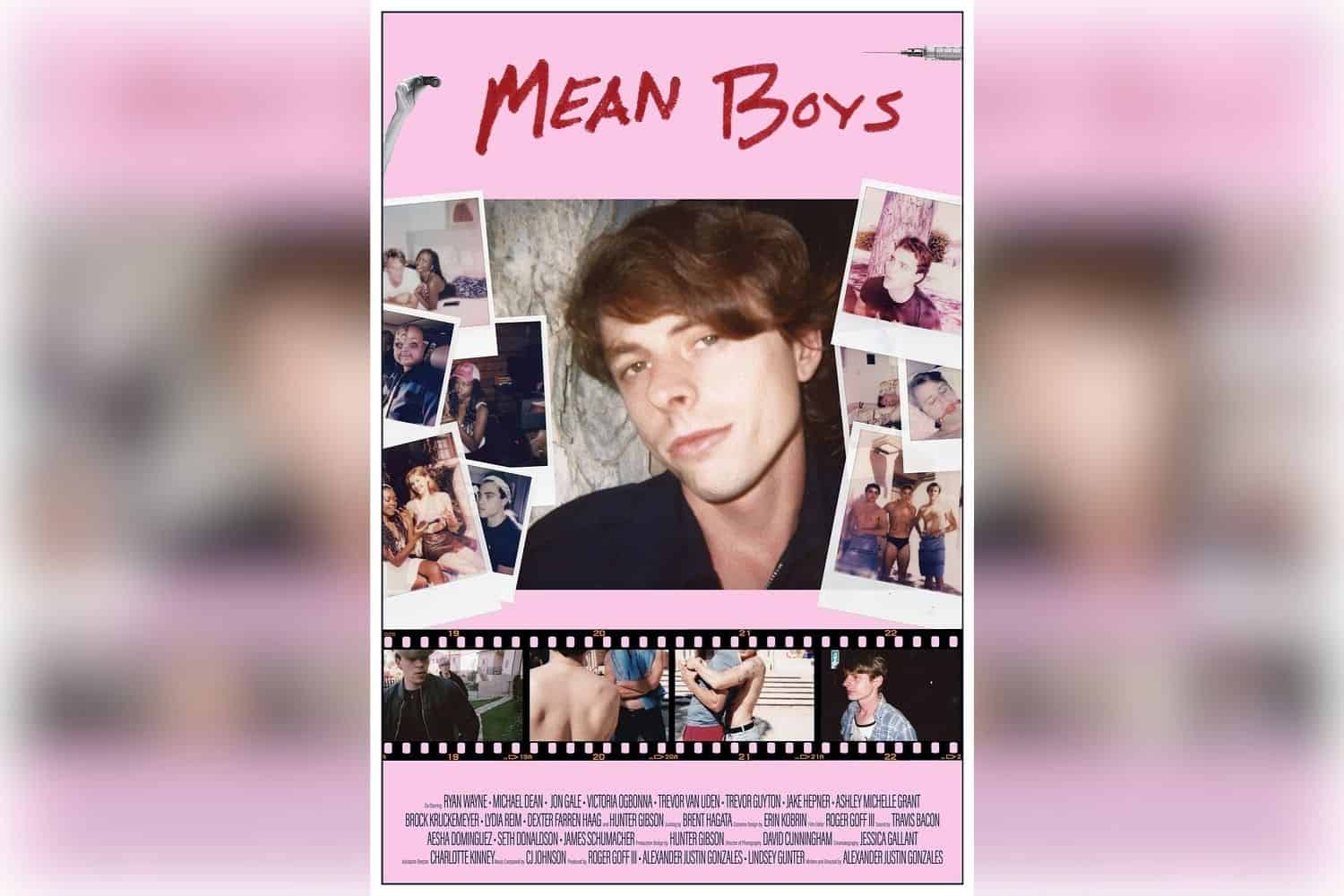
Atop the crest of the next wave of indie film, COA Pictures’ titular third offering MEAN BOYS is now on Tubi, Here TV, and Apple TV.
Most people would say high school was a bitch, but Mean Boys takes it to a whole nother level; it’s curated, lethal, queer, and fashion forward the way modern culture demands. But the fear of shorter attention spans out there doesn’t worry director Alexander Gonzales at all – giving the Y2K teen angst movie a much needed bisexual spin, layering toxic masculinity, repressed emotions, addiction and accidental homicide underneath a polished surface of cool and flexible composure. The film is influenced by the duopolic concept of Millennial tech optimism vs apathy and how the resulting generation once shaped by a pop culture long-gone is now doomed to shape it for the ‘Next Gens’ thirsty for more.
In style terms, take Ira, Gina and Julien. The film is from the pov of Ira Schlosberg (Ryan Wayne) – an outsider with main character energy, always in an emo tee and oversized casual cargo, nonchalantly stalking those he admires with a smartphone in one hand and a Coolpix digital camera in the other. He wants to blend in like a subtle call for help, ready to fight or flight at any moment.
(Courtesy)
In juxtaposition, our popular fearless leader from hell Gina Good’s (Victoria Ogbonna) styling plays with blending in as well, but in her own way; think casual feminine with consistent low rise fits, micro-mini Juicy Couture skirts to feign innocence. Yet emphasizing her need for control with opportunities for sharp glamour in tight halter tops run rampant- from still to still the audience can’t help but think of Rachel McAdams’ character in ‘The Hot Chick.’
When it came to Julien, the tragic heartthrob who belongs to everyone and no one, Gonzales had this to say; “It was imperative that Julien look and feel like someone you grew up with that you just thought always should have been an Abercrombie & Fitch model but you knew deep down would never get that far. We all knew one.”
These jock boys wear chokers, some studded and even one pearl choker. Gonzales says he made sure each of the characters that face drug addiction and grief in the latter part of the film are depicting accurate representations of trends that for some may be painful to bring back. Long shirts, too much denim, colored bracelets, skinny eyebrows, bandanas, big shades, messy black nails, cargos, gauchos, and trucker hats. Through the lens of rebellion against the vast toxic masculinity that we all know from the early 2000s to now, in Mean Boys the style ironically plunges us comfortably back into the Y2K, but everything is coded and image conscious for the age of social media, further exploring how style itself can center survival in any generation.
In the race to find the pulse for what’s next, Mean Boys aims to bridge any forthcoming gaps by entreating Gen Z’s perceived obsession with Y2K nostalgia by recreating the modern version of a world they barely missed. A world unaware, in the mix of bold patterns, bright colors, and playful creative expression left over from the idyllic buildup to the year 2000. Gen Z and Gen Alpha are already using style in rebellion against today’s pressures, all amplified by cyclical trends and digital culture. The pre-social media aesthetic clashes with the search for modern values endlessly through every frame of the film. It can’t help but reinterpret their lack of depth of their understanding of the rest of their lives through style and fashion.
In the end, one thing is clear; in Mean Boys, the looks serve the drama first.
In Partnership with APG
You can view the original article HERE.
:quality(85):upscale()/2023/08/09/750/n/1922564/10ab8bde64d3c628379954.41445403_.jpg "Best Stretch Jeans For Women")






:quality(85):upscale()/2026/10/14/739/n/1922564/2321331c6acfb17488fb99.70103842_.jpg "Louvelle App Review With Photos")