

323
The magic of cinema is a delicate sleight of hand. Audiences watch the screen, captivated by the lighting, the wardrobe, and the carefully blocked movements of the actors. Yet the true emotional heavy lifting happens in the dark, driven entirely by the score. Music dictates the pulse of the narrative. It tells the viewer when to hold their breath and when to weep. In a cultural space saturated with visual extravagance, composers remain the unseen forces of the editing room, shaping the psychological reality of every scene.
(Courtesy)
Noga Kedem navigates this hidden world with an intensity that demands attention. Operating at the highest tiers of international film and live entertainment, she commands a portfolio that spans massive Netflix documentaries, independent European cinema, and high-revenue global concert series. The film scoring business is famously rigid, operating as a fortress guarded largely by veterans steeped in traditional, piano-based composition. Kedem cut through that noise using a radically different instrument: her own vocal cords.
Growing up in the coastal city of Haifa, Israel, she faced the crushing isolation of childhood bullying. Survival required an escape, and she found her sanctuary at age nine in a local choir. Music offered a physical refuge and a rigorous education in the mechanics of sound. She spent a decade training as a classical singer, performing with the local symphony’s opera choir. Singing opera demands an intimate understanding of human breath, dramatic timing, and the immense weight of collective harmonies. It taught her how a single voice can hold its ground within a massive sonic wave.
The polished elegance of the opera house eventually collided with the abrasive rebellion of heavy metal. Seeking a venue for raw emotional expression, she immersed herself in the metal scene, eventually fronting her own successful band. Classical liturgy and heavy metal share a surprisingly similar theatrical DNA. Both traffic in extremes, demanding absolute technical precision to explore the darker, grandiose corners of the human psyche. This collision of operatic scale and metal aggression forged her permanent creative signature. Her scores carry a visceral weight, infused with sorrow that feels exposed and undeniably honest.
Transitioning to professional composition required a brutal academic pivot. Leaving the stage behind, she enrolled at the Jerusalem Academy of Music and Dance, later refining her craft at Berklee Valencia in Spain. The academic environment exposed a glaring mechanical gap. The commercial composition world revolves around the piano, an instrument she had not yet mastered. She attacked the deficit with punishing hours in the practice room. That grueling effort instilled a relentless work ethic and ultimately turned a vulnerability into a distinct artistic advantage. Because she thinks like a vocalist, her melodies prioritize sweeping, organic emotion over rigid mathematical chord progressions.
(Courtesy)
The result of this unorthodox education is a striking adaptability. Consider her work on the global live-entertainment phenomenon Candlelight Classical Beats. Candlelight concerts are staged in hundreds of cities and backed by the massive discovery platform Fever. The Classical Beats series required a composer capable of fusing timeless Baroque elegance with the heavy bass drops of modern electronic dance music. Kedem reimagined the untouchable masterpieces of Bach and Vivaldi for a standing, high-energy crowd. Ricky Schweitzer, the lead music curator for the project, noted the near-impossibility of finding a composer fluent in both classical string arrangements and heavy EDM synthesis. He praised her exceptional storytelling ability, explaining that the music is the main character in the show.
Her cinematic footprint shows the same commanding range. For the French suspense feature Valensole 1965, she served as the lead orchestrator. The film tackles a famous mid-century extraterrestrial encounter in the lavender fields of Provence. The music had to capture the grounded reality of a rural farmer colliding with the terrifying awe of the unknown. She utilized aggressive, untraditional orchestration to voice the unnatural, helping propel the film to a premiere at the Shanghai International Film Festival and a streaming spot on Mubi.
(Courtesy)
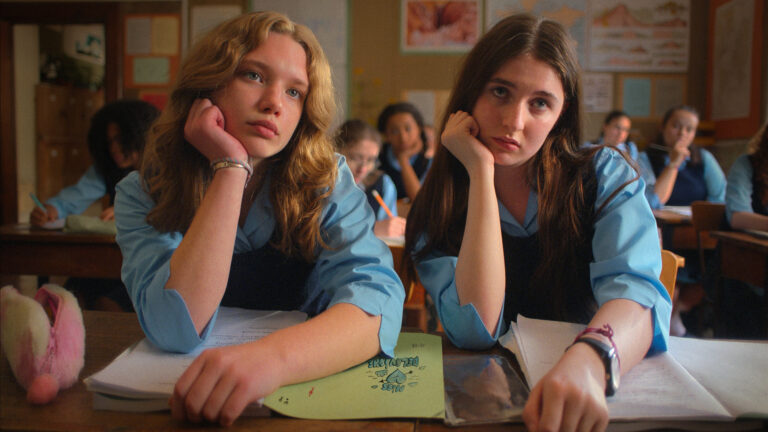
She brought that same structural precision to the massive Netflix documentary Rebel Royals: An Unlikely Love Story. The film, directed by Rebecca Chaiklin, tracks the polarizing relationship between a Norwegian princess and a Hollywood spiritual guru. Balancing centuries of rigid Scandinavian tradition against flamboyant Californian commercialism required a delicate tonal touch. While she was not the primary composer on the project, her distinguished role as an orchestrator was essential. Operating on a global platform reaching hundreds of millions of subscribers, her meticulous arrangements ensured the score guided audiences through public outrage and intimate vulnerability without slipping into melodrama. She brings equal gravity to the short film format, collaborating closely with Israeli director Doron Ne’eman. Their award-winning projects, Forbidden Holiness and Kidney Trial, explore the agonizing intersection of orthodox religious faith and modern medical crises, earning critical acclaim at the Haifa International Film Festival.
Hollywood insiders monitor her upcoming slate with keen interest. She provided additional music for the horror feature Six Till Midnight, a high-profile production starring Sasha Lane and Bella Poarch. The genre relies on visceral dread and ticking-clock tension, a perfect match for her layered, metallic soundscapes. She also co-composed the psychological sci-fi thriller The Paralytic, scoring the terrifying liminal space of sleep paralysis for Golden Globe winner Jonathan Rhys Meyers. Her extensive background in electronic sound design makes her the ideal composer for navigating that delicate boundary between life and death. In a sharp pivot toward lightness, she orchestrated the upcoming Tyler Perry romantic comedy Sisters in Italy for Amazon MGM Studios. The film, starring Tika Sumpter and Whoopi Goldberg, demanded a joyful, vibrant symphonic arrangement to match the lush Italian countryside and the comedic timing of its heavy-hitting cast.
For those watching the shifting tides of the entertainment industry, the takeaway is clear. Talent is abundant, but undeniable vision backed by mechanical execution is rare. Noga Kedem operates with a fierce authenticity, creating art that anchors the narrative and leaves a lasting bruise on the listener. She is building a legacy on her own terms, proving that when the music truly serves the story, the world leans in to listen.
In Partnership with APG
You can view the original article HERE.
:quality(85):upscale()/2024/05/21/864/n/1922564/513d0d0a664cf991318e50.95536771_.jpg "Best Gap Jeans For Women")



:quality(85):upscale()/2023/09/22/854/n/1922564/73f8c666650deb4a881748.94378606_.png "The Best Jackets to Shop at Free People")
:quality(85):upscale()/2023/11/02/961/n/1922564/9bd9b1e165441cf33232e4.30123916_.jpg "Hailey Bieber Stars in Victoria’s Secret Holiday Campaign")