





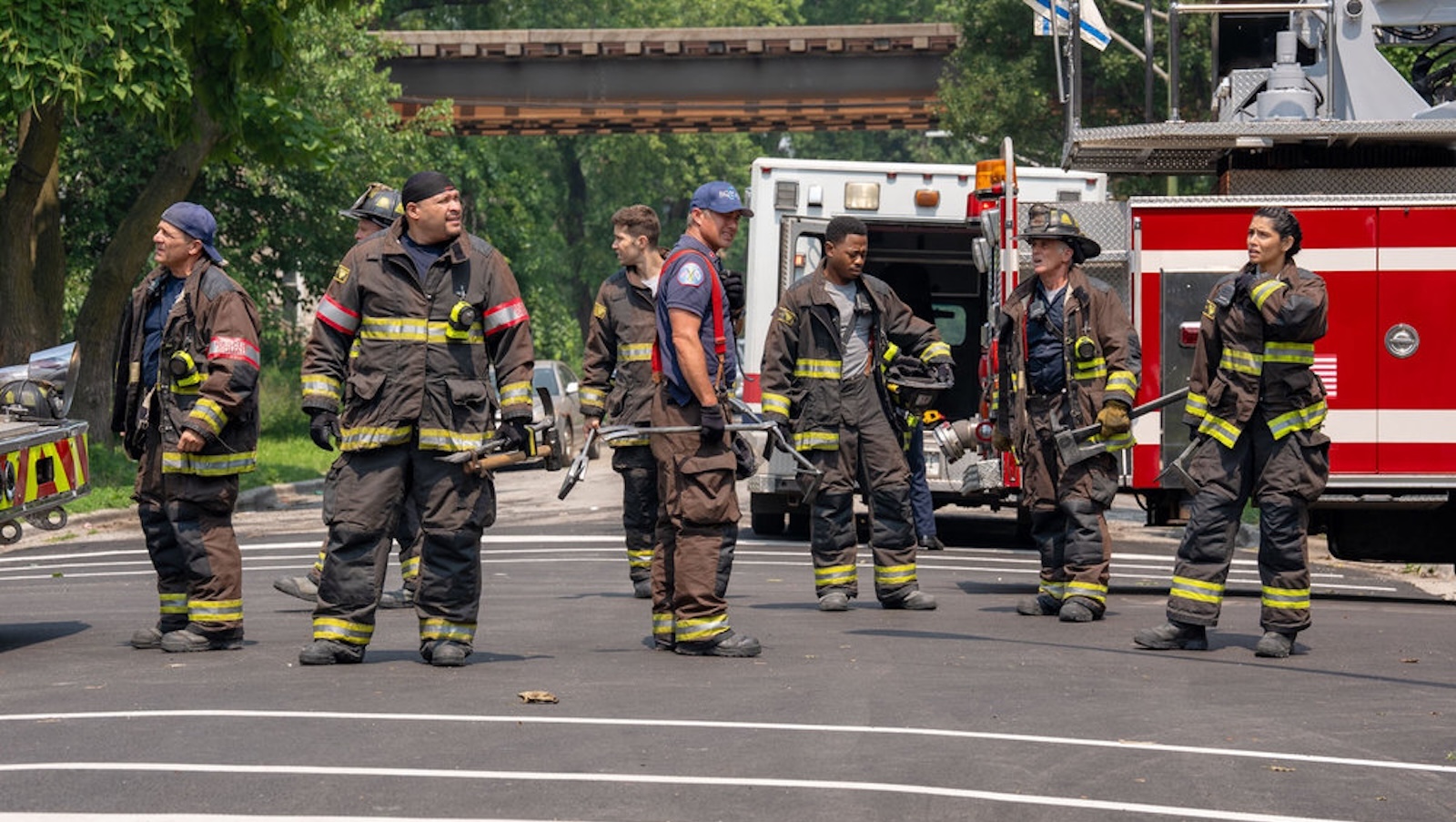
Chicago Fire hasn’t been terrible lately, but it hasn’t been particularly inspired either.
That’s a harder thing to fix than a bad season, because it means the show is still functioning — just without the passion that once made it feel essential.
A lot of that comes down to repetition and constraint. There are fewer characters on screen, rotating casts, and familiar conflicts repackaged with new faces. In other words, we’ve seen this before.
(Peter Gordon/NBC)
None of that is surprising after more than a decade on the air, but it does make you wonder whether the show is still pushing forward or merely managing to stay afloat.
But there are ways to change that without pretending the past doesn’t exist or ignoring the realities the series is clearly working under. The answer isn’t bigger disasters or louder storytelling, though. It’s focus.
Let the City Wear Them Down
(Peter Gordon/NBC)
Chicago Fire doesn’t need bigger emergencies. It needs problems that don’t reset at the end of the hour. We need the kind that come from an aging city that’s stretched thin and held together by temporary fixes.
Think about fading electrical systems that spark the same kinds of fires over and over again, crumbling buildings that keep showing up on calls because inspections were delayed or ignored, or water main breaks in winter that turn what should be routine rescues into logistical nightmares.
These aren’t flashy emergencies, but they’re the kind that wear firefighters down the most because they’re preventable.
This is where characters like Herrmann and Mouch should matter most. They’ve been around long enough to recognize patterns and remember when these problems were first flagged.
Cruz is the guy who remembers people — the shop owner, the tenant, the family that keeps showing up in different kinds of trouble. If the show leans into recurring locations or preventable city failures, Cruz should be there as the human throughline.
(Peter Gordon/NBC)
Severide fits naturally here as well, not because of emotional fallout but because this is where his technical instincts still shine. He’s always been strongest when the problem can be traced back to a failure long before the flames showed up.
They also open the door to crossovers that feel natural rather than manufactured.
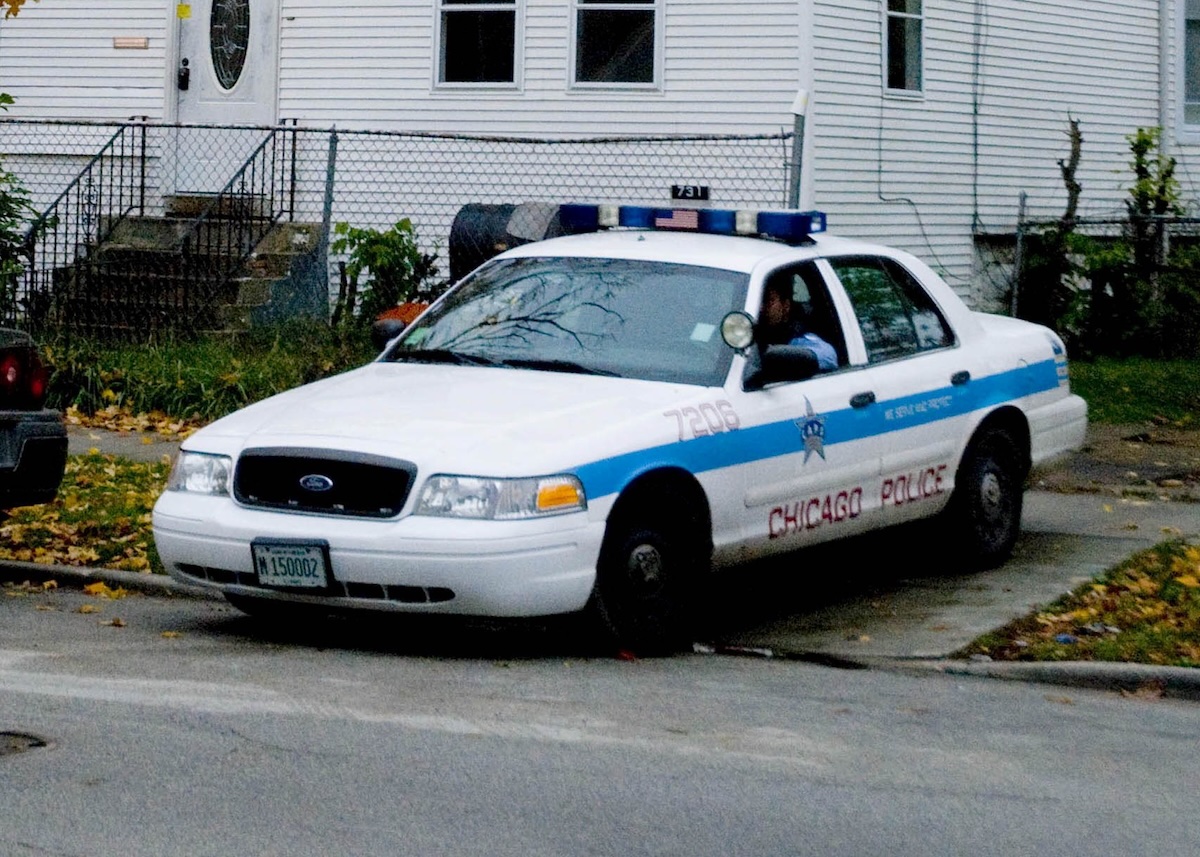
Long-term burn injuries or respiratory fallout tied to unsafe buildings naturally pull doctors from Chicago Med into the aftermath, while ignored inspections or falsified safety reports quietly bring in Chicago PD to follow the paper trail.
No citywide crisis required — just the reality that these problems don’t belong to one department.
Make Firehouse 51 the Place People Go Before They’re Done
(NBC/Screenshot)
Instead of constantly framing Firehouse 51 as a house under threat, the show could shift its role entirely. This would give 51 purpose again.
What if 51 becomes the place firefighters are sent when they’re on the edge? Not disciplinary cases or total disasters, but people who can’t quite hold it together anymore, who clash with leadership elsewhere, or who are one bad call away from washing out.
That kind of shift would give Dom Pascal real authority instead of symbolic oversight. He wouldn’t just be managing a house; he’d be deciding who gets another chance.
Herrmann could become the voice of experience, the one who knows when second chances work and when they don’t. Stella Kidd would be caught in the middle, balancing her instinct to help with the reality that leadership sometimes means drawing a line.
It also solves a practical problem — rotating characters would stop feeling like a necessity and start feeling intentional.
Let Public Distrust Linger in the Background
(Peter Gordon/NBC)
Chicago Fire has told plenty of stories about city officials targeting Firehouse 51, but what it hasn’t explored as deeply is the quieter erosion of public trust.
Think about civilians filming rescues, neighbors questioning response times, or families looking for someone to blame when there isn’t an easy answer. None of this needs to escalate into protests or grand statements. It works better when it’s fluit, when it becomes part of the air the characters are breathing.
Pascal would be dealing with complaints and optics. Severide would take it personally, especially when he knows he made the right call. Violet would hear it from patients and families in the rawest moments, when grief has nowhere else to go.
There doesn’t need to be a villain or a big reveal here, just frustration that doesn’t go away.
Treat Mental Health Calls as Part of the Job
(Peter Gordon/NBC)
Firefighters and paramedics are often first on scene for mental health crises, overdoses, domestic disturbances, and elder neglect. These calls don’t need to be framed as special episodes to matter.
In fact, they’d probably land better if they weren’t.
Violet should be carrying the weight of these calls quietly, not unraveling all at once but thinning out over time. Novak fits naturally as someone still learning where to put the emotional boundaries, absorbing more than she realizes.
Cruz has always carried emotional weight without making a show of it. He’s not the one giving speeches, but he absorbs things. That makes him a natural presence in mental health calls, overdose scenes, and situations where there’s no fix — especially paired with Violet or Novak.
Vasquez could benefit from this space as well, especially if the show wants to move him beyond familiar anger arcs. Mental health calls have a way of surfacing unresolved issues without turning them into speeches.
(Peter Gordon/NBC)
This is also where crossovers make the most sense, because these situations rarely belong to a single service.
Paramedics stabilize, doctors take over long-term care, and police handle welfare checks that escalate into emergencies.
Someone Violet treats one week might resurface in Chicago Med the next. A call that begins as a PD welfare check might quietly end with Firehouse 51 stepping in when things go sideways.
We don’t need a big event, just storyline continuity to make it work.
Use Weather as Attrition, Not Event Television
(George Burns Jr/NBC)
Chicago weather is relentless, and the show rarely treats it as anything more than scenery.
Think about heat waves that stretch response times, cold snaps that freeze equipment mid-call, or flooding that hits the same neighborhoods over and over again. This kind of pressure doesn’t need a disaster episode to work well. It works through accumulation.
Severide would feel it physically. Kidd would feel it when she’s deciding who’s too worn down to be on the line, even when there’s no one else. Herrmann would know when people are lying about being fine.
Weather-driven stories also create natural crossovers that don’t need to announce themselves.
Heat waves fill emergency rooms long after the fires are out, pulling Chicago Med into the aftermath rather than the incident.
(NBC/Peter Gordon)
Severe storms complicate evacuations and access points, giving Chicago PD a presence through crowd control and delayed investigations that ripple across episodes instead of exploding into one.
The crossover becomes a consequence, not the point, and it would really give the One Chicago franchise the feeling of taking place in the same universe.
Show Bureaucracy as a Grind, Not a Plot Twist
Chicago Fire has leaned heavily on antagonistic city officials in the past. A more effective approach now would be to show how systems fail without anyone actively trying to harm Firehouse 51.
Think about departments that don’t communicate, inspections that are delayed because no one has the staffing, or emergency protocols that conflict depending on who’s in charge.
(Peter Gordon/NBC)
Pascal could be left translating nonsense into orders. Mouch would understand the rules better than anyone and hate how they’re applied. Kidd would try to work within systems that were never designed to support what she’s doing.
There doesn’t need to be a villain or a dramatic reveal here, either, just the kind of frustration that builds when no one is technically wrong but nothing ever quite works.
Let Leadership Strain Change Relationships
Instead of external threats, Chicago Fire could face pressure from within.
Think Mouch enforcing rules he doesn’t fully agree with, Herrmann protecting his people even when it complicates discipline, Kidd balancing advocacy with authority, and Pascal deciding which version of events goes up the chain.
(Elizabeth Sisson/NBC)
Cruz doesn’t need stripes to feel leadership strain. He’s the kind of firefighter who ends up unofficially responsible for people — new recruits, struggling coworkers, civilians who latch on. When systems fail, he’s the one trying to patch the human gaps.
These aren’t explosive conflicts. They’re slow ones, intentionally so. They’re the kind that don’t resolve neatly and don’t leave relationships untouched.
They’re also actor-driven stories that don’t require a full ensemble in every episode, which makes them especially well-suited to where the show is right now.
Remember the People the City Forgets
Chicago Fire has always been strongest when it remembers the people who fall through the cracks.
(Peter Gordon/NBC)
Think elderly residents living alone in unsafe housing, undocumented workers hesitant to call for help, homeless encampments repeatedly displaced, or bandoned industrial spaces turning into recurring hazards.
Kidd would try to connect through outreach. Violet would work through repeat medical calls. Herrmann’s memory would come in handy. After all, he’s seen these people come and go for decades.
The key isn’t just in introducing these stories. It’s in following them. Let the same faces appear again, and let the team remember them even when the city doesn’t.
Chicago Fire doesn’t need to go back to what it was. It needs to decide what it wants to be now. With a smaller cast and fewer distractions, the opportunity is there — if the show is willing to stop reacting and start choosing.
Would you be interested in seeing stories like these? Share your thoughts it the comments below, and don’t forget, Chicago Fire Season 14 returns tonight. Will it be more of the same or something inspired?
-
Chicago Fire still works — it just feels stuck. Here’s how the series could refocus its stories, characters, and crossovers to feel alive again.
-
We all complain about those TV characters who deserve better. These characters suffered from trauma or horrible writing. Check out our list.
-
Once again, it looks like Chicago Fire is teasing a romance for Violet, but after four failed attempts, it’s time to let it go!
You can view the original article HERE.